

Business headshots that match the rest of the directory
Nobody studies a company page photo by photo. They see the grid and notice what does not fit. Fix the background, the crop and the lighting once, then run each person's single photo through the same settings.
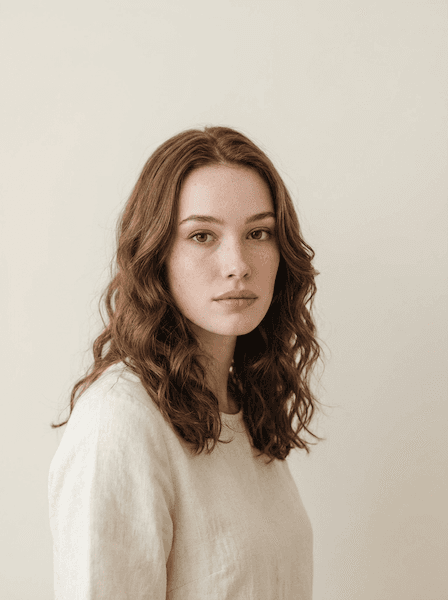

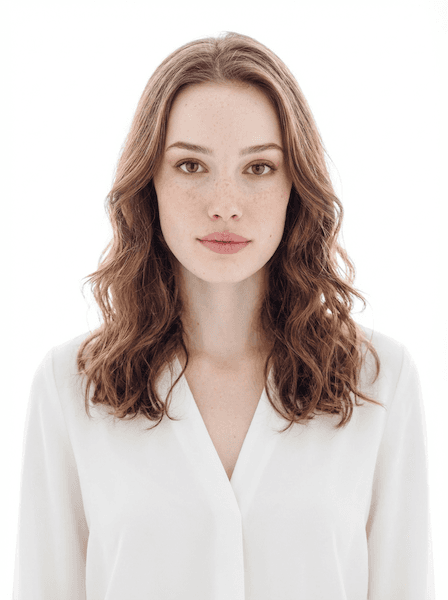

Powered by the world's best AI models
100+ models · commercial use included
A company page is judged as a set, not as forty separate photos.
Open any About Us or leadership page and watch what your eye does. It does not evaluate each portrait in turn. It takes in the grid, registers the rhythm, and snags on whatever breaks it: the one person shot against a beige wall while everyone else has grey, the one cropped at the chest while the rest are cropped at the collarbone, the one that is visibly warmer because it came from a wedding. You judge the company from the variance, not from any individual face.
Corporate headshots exist to remove that variance. That is the whole job. It is why the genre is conservative, why the backgrounds are plain, and why nobody here is trying to make an interesting photograph. Uniformity is the deliverable, and the moment it slips, a leadership page starts to look improvised in a way that has nothing to do with the quality of the people on it.
Sets slip for boring reasons. A photographer comes in for a day, forty of sixty people make it, and the rest are promised another session that never gets booked. New joiners are photographed by whoever on their team has a decent phone, against whatever wall was closest. Two years later the page carries four eras and three backgrounds, and someone in internal comms has a recurring calendar reminder about it.
How a corporate photo set falls apart
Never all at once. One reasonable exception at a time, until the page has no through-line left.
Photo day catches about half the company
The session is booked for a Tuesday. People are travelling, on leave, on a customer call, or at home that week. Whoever misses it gets an apologetic email and a promised second date, and that date competes with next quarter's priorities. The gap becomes permanent.
New joiners get whatever was convenient
Someone starts in March, the last shoot was in October, and their bio page cannot sit empty. So a colleague takes a photo by the window on their second day. It is a perfectly decent picture, and it is at a completely different colour temperature, crop and background from everyone around it.
Backgrounds nobody agreed on
One set was shot on white, another on grey, a third in the old office in front of the exposed brick. Individually each is fine. Assembled into a directory they read as three different companies, and the brick one now advertises an office you moved out of eighteen months ago.
Chasing photos is somebody's unpaid second job
The comms or people-ops person sending the fourth reminder is doing real work that produces no visible output. Half the replies are a photo that does not match, a file that is 400 pixels wide, or a link to a LinkedIn profile. The bottleneck is not photography. It is coordination.
What a business headshot says before anyone reads a bio
The people who look at your team page are rarely browsing. They are a buyer checking who they will work with after a contract lands, a candidate weighing the culture against the job ad, or a partner confirming a company is real before wiring money. Each is doing a quick due-diligence pass, and the photo grid is the fastest thing on the page to read.
What they take from it is less about individual competence than about whether the organisation has its own house in order. A consistent set says the company runs processes and finishes them. A scattered one says the opposite, whatever the copy above it claims.
- Is this an organisation that finishes what it starts?
- Are these current employees, or a page that has not been maintained?
- Does the level of formality here match the contract we are about to sign?
- Would I be comfortable introducing this team to my own client?
From one photo to a directory-ready portrait
No photo day to schedule, and no second session for the people who missed it.
Upload one photo
Each person uploads one clear, front-facing photo. Even lighting, plain wall if possible, no sunglasses or hats.
Choose a style
Pick Corporate Classic, or any of the 65 styles, and lock the same background, lighting and attire settings for everyone.
Download your pick
Get up to four variations in about 30 seconds, pick the one that matches the existing grid, and hand it to whoever updates the site.
How to match a set you already have
Before you generate anything, spend five minutes looking at the page you are adding to.
- Decide the background first, then never revisit it
- Clean White, Neutral Grey and Soft Gradient are the three that behave in a directory. Pick one, write it down, and use it for every person including the ones added in eight months. Neutral Grey is the most forgiving because it separates from both light and dark hair without going flat.
- Copy the crop and the eye line
- Look at where the existing photos cut the shoulders and where the eyes fall in the frame. Two portraits at the same eye height read as a set even when the faces are nothing alike. Set framing to a close headshot rather than an upper-body portrait unless the existing page is clearly looser than that.
- One lighting choice for the whole company
- Soft Studio is the default worth defending: shallow shadows, even skin, no drama to clash with the person next to you. Ring Light is the alternative if the existing set is brighter and flatter. Mixing the two across a page produces exactly the inconsistency the whole exercise is meant to remove.
- Set a dress floor, not a dress code
- Rather than mandating a suit, agree the minimum. Business Casual covers most companies. Smart Casual Blazer suits consulting and client-facing teams. Navy Suit or Charcoal Suit for finance, insurance and accounting. A floor gets complied with, a code gets argued about.
- No logos, no tight patterns
- Branded polos date a photo the day the brand refreshes, and they make the set unusable if someone changes team. Fine checks and thin stripes shimmer when a directory thumbnail scales them down. Solid mid-tone colours hold their shape at every size a company site will ask for.
- Write the recipe down and keep it
- Style, background, lighting, attire tier, expression, framing, aspect ratio. Six lines in the onboarding doc. It is the difference between a set that survives three years of hiring and one that starts drifting the first time a new starter is asked to sort out their own photo.
Styles that hold a directory together
Four of the 65 studio styles, chosen for how well they repeat across many people.
The set matters more than any single photo
It is worth being honest about what a corporate headshot is for. It will not win business on its own, and no customer has ever chosen a supplier because the About page looked tidy. What a mismatched set does is introduce a doubt at the exact moment someone is checking whether you are a serious organisation, and that doubt is avoidable.
Because each run works from one photo per person and returns up to four variations, the coordination problem shrinks to a message with six settings in it. A new starter in week one, someone who hated their photo from the last shoot, a team that was acquired and never photographed at all: the same recipe covers all of them, and the page stops drifting.
Frequently asked questions
Keep looking around
Create your corporate headshot
One photo in, up to four variations out, in about 30 seconds.