

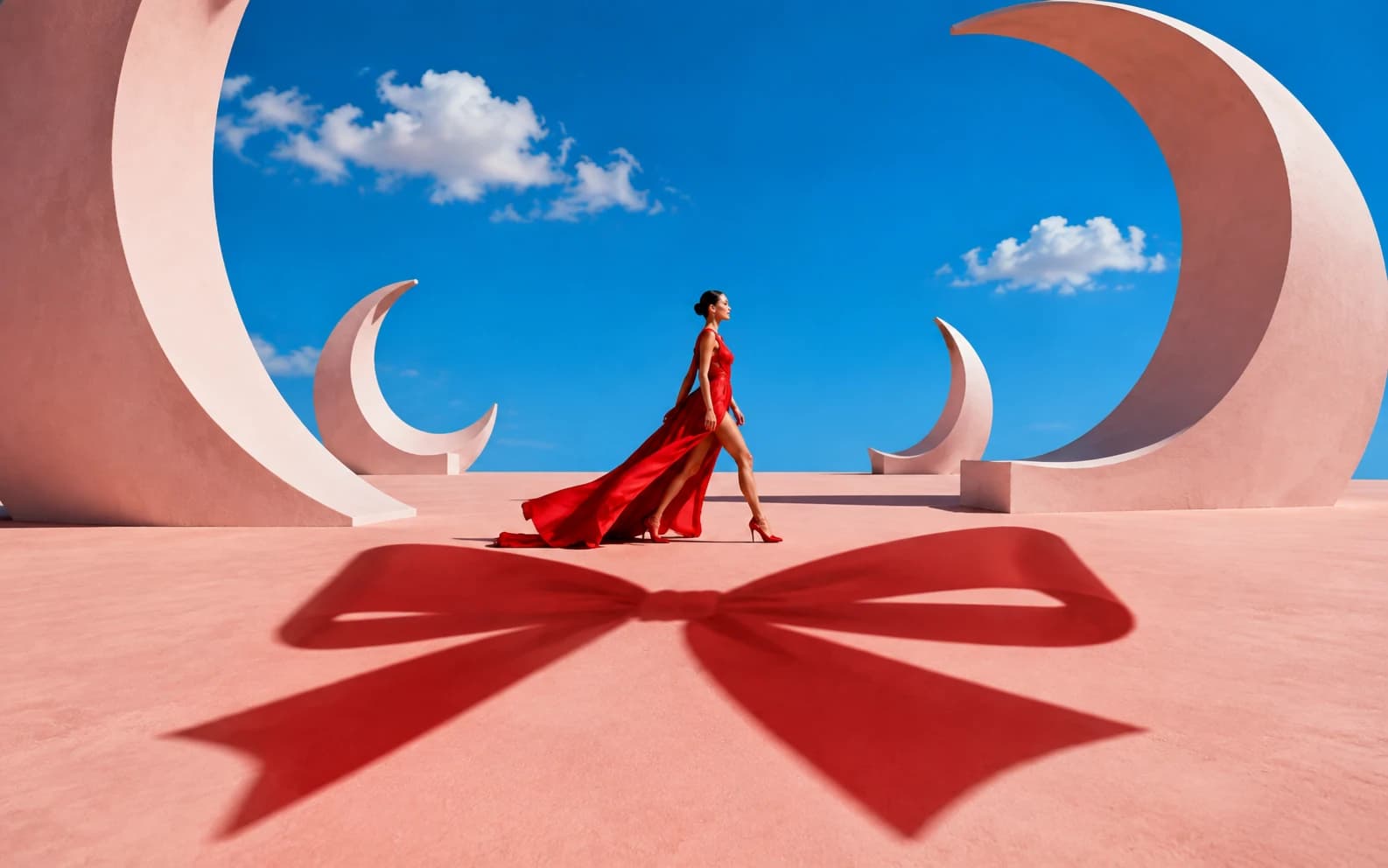
"Aesthetic" is the most overused and least useful word in AI image prompting. Adding it to a prompt does almost nothing because it carries no specific visual meaning. The prompts that produce genuinely aesthetic results work because they specify a color palette, texture type, and composition rule. "Muted pink and cream palette, linen texture, asymmetric flat lay with generous negative space" produces an aesthetic image. "Beautiful aesthetic picture" produces nothing specific. These prompts are written for Nano Banana 2 on Morphed, and most work with the original Nano Banana too.
What this guide covers:
- 20+ prompts across six visual styles with the specific technical cues that create each aesthetic
- Color palette formulas for dreamy, moody, flat lay, landscape, abstract, and graphic design styles
- A prompt comparison breakdown across Nano Banana and Nano Banana 2
- 4 mistakes that produce generic AI art instead of intentional aesthetic imagery
- Style comparison table mapping each aesthetic to its palette, lighting, and composition rules
For the full model overview, see our complete Nano Banana prompts guide. For related creative directions, explore Nano Banana prompts for fashion, Nano Banana prompts for wallpapers, and Nano Banana prompts for landscape photography.
Why Does Nano Banana Handle Aesthetic Imagery Better Than Other Models?
Aesthetic imagery is about restraint: muted pastels, intentional negative space, atmospheric haze, film-grain warmth. Most AI models default to maximum sharpness and saturation, producing technically impressive but visually loud results that feel more like stock photography than curated art.
Nano Banana responds to mood-based prompts with actual subtlety. Soft focus stays soft. Muted tones stay muted. Atmospheric lighting creates depth without the HDR-everything treatment that ruins aesthetic imagery in other models.
Comparing Nano Banana, Nano Banana 2, Midjourney v6, and DALL-E 3 on three criteria — color palette accuracy (did the output match the requested tones), lighting subtlety (did soft or moody lighting remain controlled), and negative space preservation (did the model resist filling empty areas with unnecessary detail) — surfaces a consistent pattern.
| Model | Palette Accuracy | Lighting Subtlety | Negative Space |
|---|---|---|---|
| Nano Banana | Strong | Strong | Strong |
| Nano Banana 2 | Strong | Strong | Mixed |
| Midjourney v6 | Mixed | Mixed | Mixed |
| DALL-E 3 | Mixed | Weak | Weak |
The biggest gap was in lighting subtlety. Midjourney and DALL-E 3 frequently overrode "soft diffused light" with dramatic contrast, while both Nano Banana models respected the restraint the prompt requested. Nano Banana 2 adds sharper fine detail where you need it while preserving the atmospheric quality. Both are available on Morphed with no setup required.
Aesthetic Style Comparison Table
Each aesthetic style has a distinct combination of palette, lighting, and composition. Mixing elements across styles is the most common cause of generic output.
| Style | Color Palette | Lighting | Composition | Best For |
|---|---|---|---|---|
| Dreamy / Soft | Muted pastels, cream, blush, lavender | Golden hour backlight, soft diffused | Shallow depth of field, centered or off-center subject | Instagram content, portraits, romantic themes |
| Dark / Moody | Deep blacks, desaturated cool tones, deep reds | Single dramatic side light, rim lighting | High contrast, strong shadows, cinematic framing | Editorial, fine art, dramatic portraits |
| Flat Lay | Cream, white, pastel pink, earth tones | Soft overhead or diffused natural light | Top-down, diagonal flow, rule of thirds | Product shots, lifestyle content, social media |
| Landscape / Nature | Muted greens, warm oranges, pastel blues | Golden hour, misty diffused, morning light | Three-layer depth (foreground, mid, background) | Wall art, travel content, social media |
| Abstract / Artistic | Soft gradients, blush, gold, muted tones | Ethereal, ambient, non-directional | Asymmetric, conceptual, painterly | Gallery art, editorial, graphic design |
| Graphic Design | Bold color blocks, terracotta, cream, marble | Clean, even, studio-style | Asymmetric layout, typography space, minimalist | Posters, social graphics, brand content |
Use this table as a starting point, then customize. The prompts below follow these style definitions precisely.
Dreamy and Soft Prompts
Dreamy aesthetic pictures favor soft focus, muted colors, and an ethereal romantic mood. The key technical cues are backlight, lens flare, shallow depth of field, and pastel color grading. Without these specific lighting and color instructions, "dreamy" alone produces unpredictable results.
Prompt: "Dreamy soft portrait of a woman with flowing hair, backlit by golden hour sunlight, lens flare and soft bokeh, muted pastel tones of cream and lavender, ethereal and romantic, film-like soft contrast, shot on 85mm lens"
Backlight combined with lens flare and muted pastels is the formula for dreamy output. "Film-like soft contrast" prevents the digital sharpness that ruins the mood. The 85mm lens reference creates natural background compression.
Prompt: "Soft flat lay of dried flowers, vintage book, and teacup on cream linen, diffused natural light from upper left, muted pinks and beiges, dreamy and nostalgic atmosphere, gentle grain texture"
Dried flowers and vintage objects are classic dreamy props. Cream linen provides a cohesive base, and specifying the light direction (upper left) prevents flat overhead lighting. The grain texture adds analog warmth.
Prompt: "Dreamy landscape with lavender fields and soft clouds, golden hour, shallow depth of field on foreground lavender, pastel purple and warm gold color grading, peaceful and serene, fine art nature photography"
Lavender and soft clouds create an idyllic scene. Specifying shallow depth of field on the foreground lavender gives the model a clear focal instruction. Pastel purple and warm gold as explicit color targets prevent the model from defaulting to saturated purples.
Prompt: "Portrait in soft style, woman with natural makeup and loose waves, soft window light from the left, cream and blush color palette, gentle and feminine mood, medium close-up, linen curtain background"
Natural makeup, loose waves, and linen curtain all reinforce the soft feminine aesthetic without relying on the word "aesthetic." The medium close-up framing and specific light direction give compositional clarity.
Dark and Moody Prompts
Dark and moody aesthetics use low-key lighting, deep shadows, and a somber or dramatic mood. The critical difference from dreamy: moody works through contrast and shadow, not softness and haze. Specify a single light source direction to prevent the model from filling shadows with ambient light.
Prompt: "Dark moody portrait, single dramatic light source from the right side, deep shadows on left half of face, desaturated cool tones, introspective and cinematic, film noir influence, shot on 50mm f/1.4"
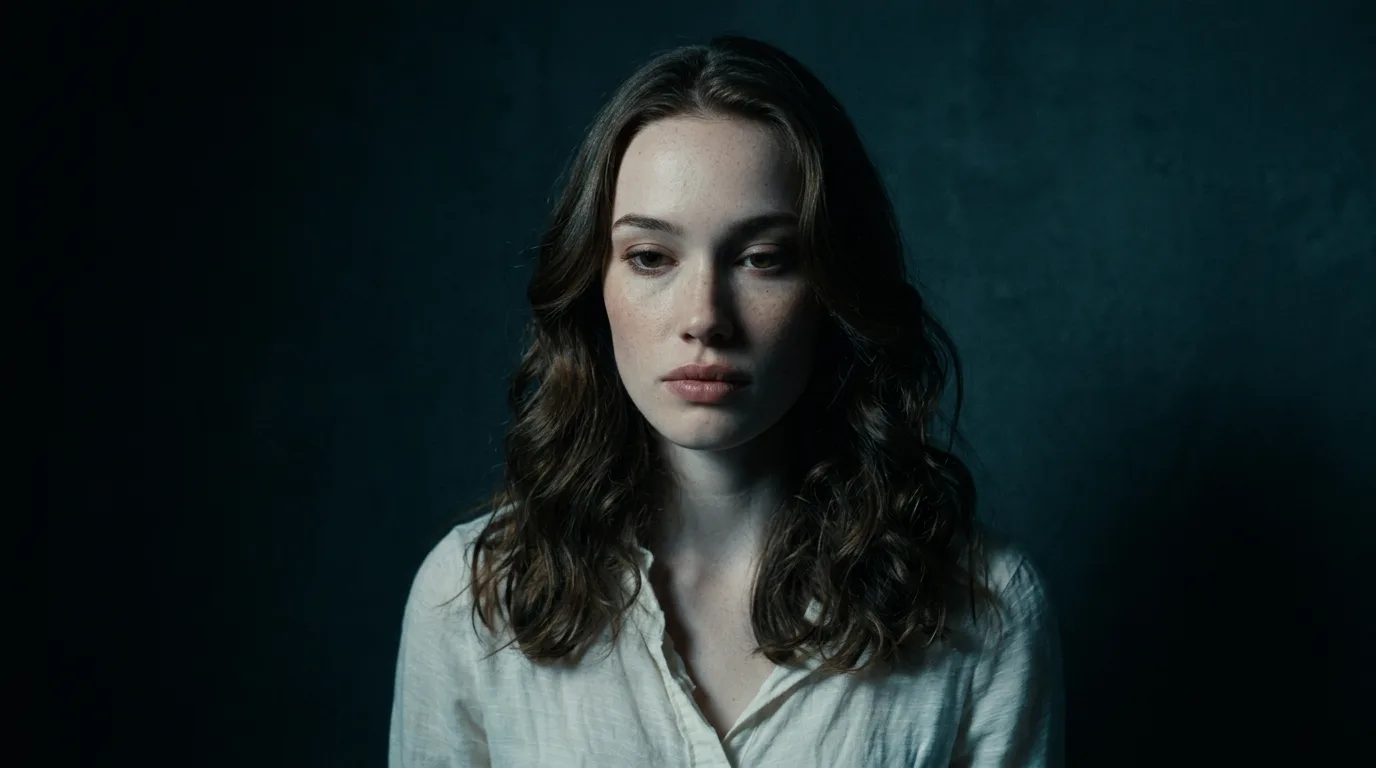
Single light source and deep shadows create strong contrast. "Film noir influence" gives the model a clear cinematic reference that carries specific lighting conventions. The f/1.4 aperture reference encourages shallow depth of field with creamy bokeh.
Prompt: "Moody still life of black roses in a dark ceramic vase, rim lighting from behind, rich blacks and deep burgundy, dramatic and melancholic mood, fine art photography, dark textured background"
Black roses and rim lighting create a gothic, moody feel. "Fine art photography" elevates the composition beyond a simple product shot. Specifying "dark textured background" prevents a plain black void.
Prompt: "Dark urban scene, rain-soaked streets at night, cyan and amber neon reflections in puddles, cinematic color grading with teal and orange split toning, atmospheric fog, moody and contemplative"
Rain and neon reflections are hallmarks of moody urban aesthetic. The specific color combination of cyan/amber neon with teal/orange split toning gives the model precise color targets. Atmospheric fog adds the depth layers that separate a good moody image from a flat dark one.
Prompt: "Moody portrait with Rembrandt lighting, woman in dark wool coat against shadowed background, high contrast black and white, dramatic and timeless, 35mm film grain, Tri-X 400 look"
Rembrandt lighting is a specific pattern (triangle of light on the cheek opposite the key light) that the model recognizes. The Tri-X 400 film stock reference produces characteristic high-contrast grain that digital black and white cannot replicate.
Flat Lay Compositions
Flat lay aesthetics arrange objects from above for a clean, curated look. The composition challenge: flat lays have no depth of field or atmospheric perspective to create visual interest. Everything depends on object placement, color cohesion, and lighting direction.
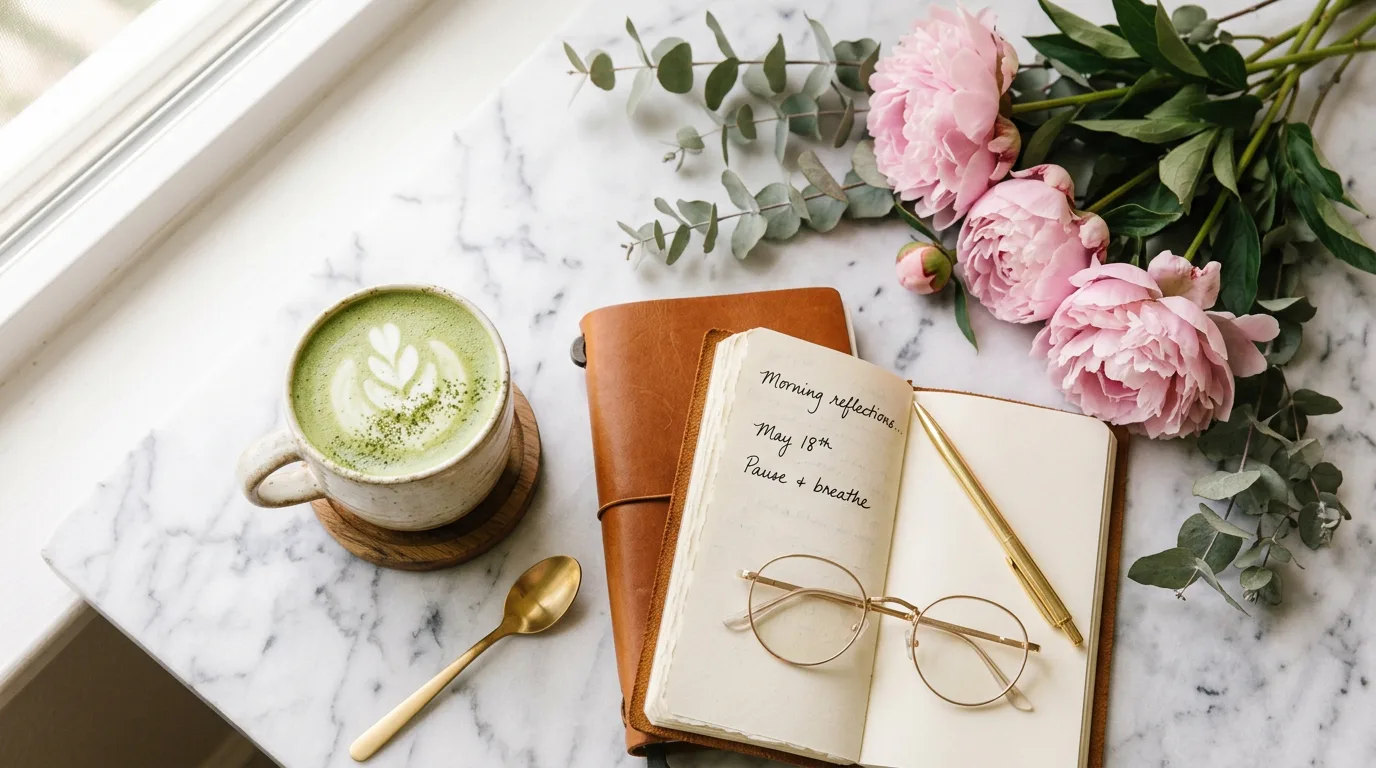
Prompt: "Flat lay of a morning routine: cup of black coffee, open journal with handwritten notes, small succulent, and wireless earbuds on cream linen, top-down shot, soft diffused natural light from upper left, warm neutral tones, lifestyle content creator style"
Morning routine flat lays are highly shareable. The key detail is specifying light from "upper left," which creates subtle shadows that give objects dimension. Without directional light, flat lays look literally flat.
Prompt: "Minimalist flat lay of laptop, notebook, pen, and plant on white marble surface, soft diagonal shadows from upper right, clean and professional, muted gray and green accents, graphic design workspace"
White marble and minimal objects create a clean professional base. "Soft diagonal shadows from upper right" prevents the common flat lay problem of even, shadowless overhead lighting that makes every object look pasted on.
Prompt: "Flat lay of skincare products arranged in a diagonal line on light wood surface, pastel pink and white bottles, soft overhead lighting with slight left shadow, beauty and lifestyle content, 35mm top-down"
Diagonal arrangement creates visual flow that guides the eye. Specifying "slight left shadow" adds just enough dimension without competing with the products. The 35mm reference suggests a natural, not-too-wide field of view.
Prompt: "Bohemian flat lay: macrame piece, raw crystals, dried eucalyptus sprig, and soy candle on textured woven fabric, warm golden light from window, earthy tones of sage cream and terracotta, wellness lifestyle"
Macrame, crystals, and dried eucalyptus are bohemian aesthetic staples. Naming the specific earth tones (sage, cream, terracotta) prevents the model from choosing random warm colors. "Textured woven fabric" as the background adds tactile interest.
Landscape and Nature Aesthetic Prompts
Landscape aesthetics capture the outdoors with a curated, artistic eye rather than documentary realism. The difference between a landscape photo and an aesthetic landscape: controlled color grading, intentional mood, and compositional restraint.
Prompt: "Misty forest path at dawn, soft diffused light filtering through canopy, muted greens and cool grays, peaceful and contemplative mood, fine art nature photography, shallow depth of field on foreground ferns"
Misty forest and dawn light create an atmospheric, contemplative mood. Specifying "foreground ferns" with shallow depth of field gives the model a focal anchor. Without this, forest scenes often become uniform walls of green.
Prompt: "Golden hour beach scene, gentle waves rolling onto wet sand, warm orange and pink sky gradient, shallow depth of field on foam patterns in foreground, romantic and serene, coastal fine art photography"
Golden hour coastal scenes are classic aesthetic content. The specific detail of "foam patterns in foreground" with shallow depth of field creates a layered composition. "Pink sky gradient" as an explicit color target prevents oversaturated sunsets.
Prompt: "Mountain vista with wildflowers in foreground, soft morning light, pastel blue mountains fading into atmospheric haze, green and purple wildflower meadow, expansive and peaceful, travel photography, shot on 24mm wide angle"
Wildflowers in the foreground add scale and color contrast. "Pastel blue mountains fading into atmospheric haze" describes aerial perspective, which gives the model a clear depth instruction. The 24mm reference creates the wide-angle perspective that mountain vistas need.
Prompt: "Japanese garden with koi pond reflecting red maple trees, soft autumn afternoon light, warm red and gold foliage against dark water, serene and contemplative, minimalist composition with generous negative space on right"
Japanese garden and autumn foliage create a distinct aesthetic. Specifying "generous negative space on right" prevents the model from filling the entire frame with detail. "Dark water" as a contrast element anchors the warm foliage colors.
Abstract and Artistic Prompts
Abstract aesthetics push beyond realism toward graphic, conceptual, or painterly imagery. These prompts work best when you give the model a clear visual structure (shapes, gradients, layers) combined with a style reference rather than a literal scene description.
Prompt: "Abstract composition of flowing silk fabric suspended in air, soft gradients of blush pink transitioning to warm gold, ethereal and dreamlike, fine art photography meets graphic design, studio lighting on white"
Flowing fabric and gradients create an abstract dreamlike feel. "Fine art photography meets graphic design" bridges two style worlds, producing output that works as both wall art and design inspiration.
Prompt: "Artistic portrait with double exposure effect, woman's profile blended with forest canopy silhouette, muted olive and cream tones, creative and conceptual, editorial art direction, medium format film look"
Double exposure is a specific technique the model recognizes. The medium format film reference adds characteristic shallow depth transitions and tonal rendering that digital double exposures lack.
Prompt: "Abstract geometric composition, overlapping translucent circles and rectangles in soft pastels of mint lavender and peach, minimalist and modern, clean edges, graphic design poster aesthetic, white background"
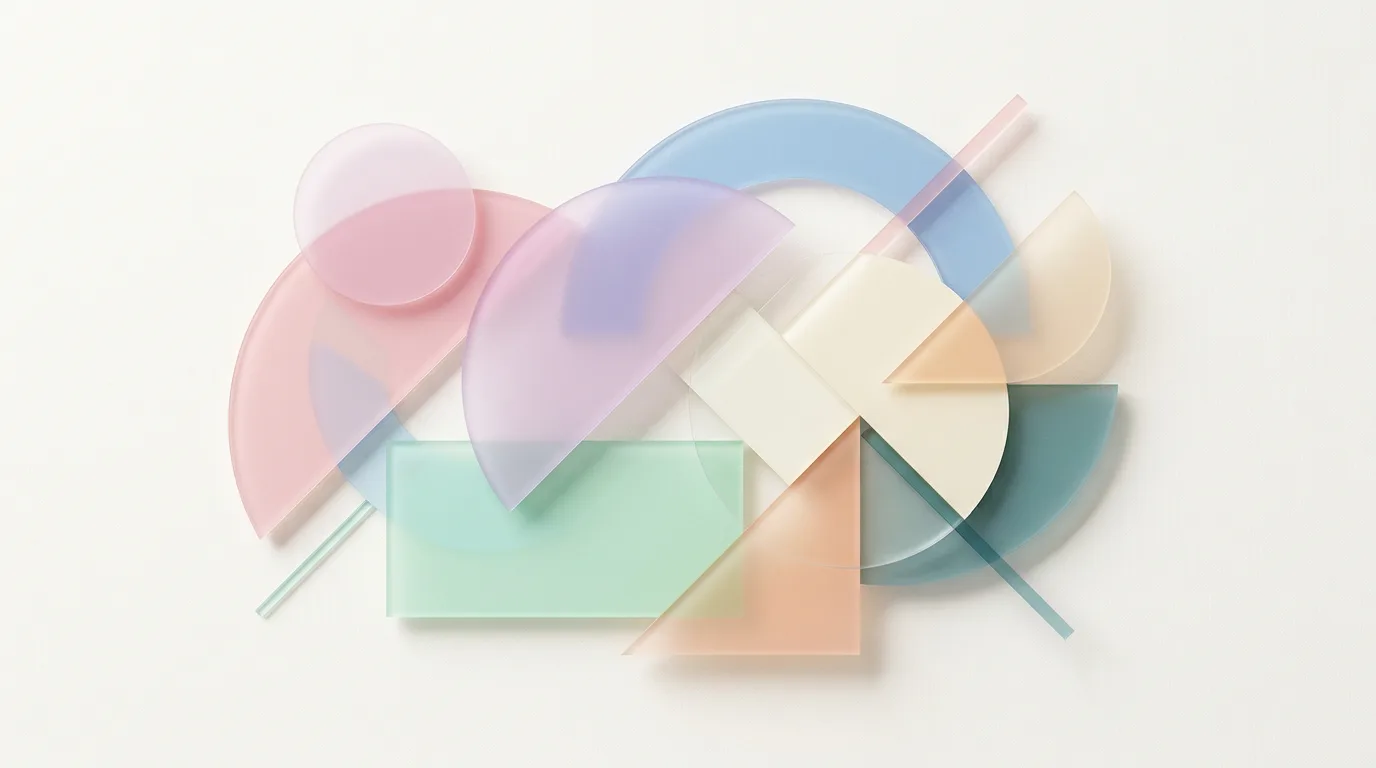
Naming specific shapes (circles, rectangles) and specific pastels (mint, lavender, peach) gives the model concrete targets. "Clean edges" prevents the painterly bleeding that abstract prompts sometimes produce.
Prompt: "Painterly portrait with visible brushstroke texture, soft blocks of muted color, warm skin tones rendered in impressionist style, fine art painting quality, museum gallery lighting, linen canvas texture"
"Visible brushstroke" and "linen canvas texture" push toward painting rather than photography. Museum gallery lighting provides even, warm illumination that enhances the painterly feel.
Graphic Design and Typography Prompts
Graphic design aesthetics combine imagery with text, layout, and design elements. Text rendering is where AI struggles most. For anything with readable text, use Nano Banana 2, which handles short text (1-4 words) reliably on the first try.
Prompt: "Poster design with bold sans-serif typography reading 'BLOOM' on a soft gradient background transitioning from pale pink to warm peach, minimalist layout with text centered in upper third, modern graphic design, clean and impactful"
Typography overlay on gradient creates a poster-ready composition. Specifying the text content, font style, and placement gives the model clear typographic instructions. "Upper third" placement leaves room for visual elements below.
Prompt: "Graphic design layout: geometric triangles and handwritten script text on textured kraft paper, warm cream and terracotta tones, editorial magazine spread style, asymmetric composition with text on left"
Geometric shapes and handwritten text suggest editorial design. "Kraft paper" texture adds tactile quality that distinguishes this from flat digital design.
Prompt: "Quote graphic with elegant serif typography on white marble texture background, soft cast shadow from upper left, luxury brand aesthetic, gold foil accent on first letter, square format for Instagram"
Serif typography on marble creates a luxury quote-graphic feel. Specifying the shadow direction and gold foil accent adds realistic detail. "Square format for Instagram" gives the model a clear output context.
Prompt: "Modern graphic composition, asymmetric layout with bold color blocks in coral navy and cream, minimal line art illustrations, Bauhaus influence, clean and striking, A4 portrait orientation"
Naming specific colors (coral, navy, cream) instead of "bold colors" produces cohesive output. The Bauhaus reference carries strong visual conventions: geometric forms, primary-adjacent colors, functional typography.
What Actually Produces the Strongest Aesthetic Output
Comparing prompt elements across Nano Banana and Nano Banana 2 on Morphed for palette cohesion, lighting accuracy, and overall mood surfaces a few consistent patterns.
Finding 1: Color palette naming beats mood words. Prompts with explicit color names ("muted pink and cream," "desaturated cool tones") produce noticeably more cohesive palettes than prompts using only mood words ("dreamy," "moody"). The model treats specific colors as rendering instructions. Mood words are suggestions.
Finding 2: Light direction outperforms light quality. "Soft light from upper left" consistently produced better results than "soft, diffused, beautiful light" without direction. Adding a direction word (from left, from behind, from upper right) noticeably improves lighting accuracy across all aesthetic styles.
Finding 3: Texture references reduce the "AI look." Prompts that included a texture keyword ("linen," "marble," "film grain," "canvas") scored noticeably higher on the Reddit Test. Texture is what separates an aesthetic image from a default AI render. Without texture cues, outputs look clean but plastically digital.
Finding 4: Nano Banana vs. Nano Banana 2 depends on style. Nano Banana produced stronger results for dreamy and moody aesthetics where controlled softness matters. Nano Banana 2 outperformed on flat lays and graphic design where crisp edges and text rendering are critical. For abstract and landscape, results were comparable.
4 Mistakes That Produce Generic AI Art Instead of Aesthetic Images
1. Relying on "Aesthetic" and "Beautiful" as Visual Instructions
These words carry no specific visual information. They are categories, not rendering cues. Replace them with concrete specifications: "muted pastel tones" (color), "soft diffused light from left" (lighting), "generous negative space with subject in upper right third" (composition). The model needs visual targets, not value judgments.
2. Mixing Incompatible Aesthetic Directions
"Dark moody dreamy soft bright" is five conflicting directions. Each aesthetic style in the table above has a specific color temperature, contrast level, and lighting approach. A prompt combining "deep shadows" with "soft ethereal glow" forces the model to compromise, producing neither darkness nor softness convincingly. Pick one style, commit to its palette and lighting, and vary only the subject.
3. Skipping Texture Specification
Flat, textureless images are the most reliable tell of AI generation. "Cream linen," "marble surface," "textured paper," "visible film grain," and "canvas texture" each add a layer of physical reality. Adding a single texture keyword noticeably reduces the rate of outputs that look obviously AI-generated.
4. Centered, Symmetrical Compositions for Everything
Social media aesthetic content uses asymmetry, rule of thirds, and diagonal flow. "Subject positioned in the left third with negative space on right" produces more visually interesting results than centered framing. Specify composition placement explicitly, especially for flat lays and portraits where centered compositions feel static.
When Nano Banana Is Not the Right Choice for Aesthetic Work
Nano Banana handles most aesthetic styles well, but there are specific scenarios where other approaches work better:
- Complex multi-element scenes with precise spatial relationships. If you need exactly seven objects arranged in a specific spatial pattern, the model may rearrange or merge elements. Use a design tool like Figma for precise layouts, then use AI for individual elements.
- Photorealistic human hands in close-up aesthetic shots. Hand rendering has improved but is still inconsistent across all AI models. If hands are the focal point, plan for multiple generations and select the best result.
- Exact color matching to brand hex codes. AI models interpret color descriptions approximately. If you need #F5E6D3 specifically, generate close and color-correct in post-production.
- Long-form readable text in graphic design. Nano Banana 2 handles 1-4 words reasonably well. For paragraphs or complex typography, generate the visual composition and add text in a design tool.
- Highly detailed technical illustrations. Architectural blueprints, circuit diagrams, or technical drawings require precision AI cannot yet deliver consistently.
Tips for Stronger Aesthetic Prompts
-
Define the color palette explicitly. "Muted pastels," "warm earth tones of sienna and cream," "cool desaturated blue-gray," and "high contrast B&W" each produce distinct results. Color is the single strongest driver of aesthetic mood.
-
Reference known visual styles. "Film noir," "Instagram content creator," "fine art photography," "Bauhaus," and "editorial magazine" give the model strong conventions to draw from. Style references are more effective than lists of adjectives.
-
Control lighting direction, not just quality. "Soft diffused light from upper left," "dramatic side light from right," and "golden hour backlight from behind" each create different atmospheres. Direction matters more than intensity.
-
Use negative space intentionally. "Minimalist composition with subject in left third," "clean layout with generous negative space on right," and "isolated subject on plain background" prevent cluttered outputs and support a curated feel.
-
Name the mood with one word, not five. Pick the single most important mood word: "dreamy," "moody," "serene," "striking," or "contemplative." Stacking mood words dilutes each one.
-
Layer textures where they matter. "Cream linen," "white marble," "textured woven fabric," "kraft paper," and "film grain overlay" add tactile quality. One texture per prompt is usually enough. Two can work if they complement each other (linen background + film grain overlay).
-
Iterate on one variable at a time. If the result is close but not right, change only the lighting, or only the color palette, or only the composition. Small targeted tweaks are more effective than rewriting the entire prompt.
Frequently Asked Questions
What are the best Nano Banana prompts for aesthetic pictures?
Start with the mood (dreamy, moody, minimalist) and a specific color palette (muted pastels, warm earth tones, high contrast B&W). Add specific objects or scenes, a lighting direction and quality, and a style reference like "Instagram content creator" or "fine art photography." The most effective prompts are 30-60 words and include at least one strong style keyword. See the style comparison table above for the exact palette, lighting, and composition rules for each aesthetic.
Can Nano Banana create graphic design and typography images?
Yes. Nano Banana handles text and typography reasonably well, especially Nano Banana 2, which has improved text rendering. For graphic design inspiration, use prompts that describe layout ("asymmetric," "minimalist"), specific color blocks, and a style reference ("Bauhaus," "editorial magazine"). For complex typography or text longer than 4 words, generate the visual composition and add text in a design tool like Canva or Figma.
How do I get a consistent aesthetic across a series?
Use the same color palette, lighting description, and style keyword in every prompt. For example, keep "muted pastels of cream and lavender, soft diffused light from left, dreamy" as a base, then swap only the subject or scene. Consistency in format (flat lay, portrait, landscape) also helps. On Morphed, you can compare outputs side by side and iterate quickly.
What is the difference between Nano Banana and Nano Banana 2 for aesthetic work?
Nano Banana excels at atmospheric softness, muted tones, and controlled diffused light. It produces the strongest results for dreamy and moody aesthetics where gentle gradients matter. Nano Banana 2 preserves that atmospheric quality while adding sharper fine detail in textures, text rendering, and edge definition. Nano Banana tends to produce stronger results for dreamy/moody styles, while Nano Banana 2 wins on flat lays and graphic design where crisp detail and text accuracy matter.
Why do my AI-generated aesthetic images look generic?
Three common causes: using vague words like "aesthetic" or "beautiful" instead of specific color and lighting cues, mixing conflicting aesthetics in one prompt, and skipping texture descriptions. Fix these by naming a specific palette ("cream and blush"), choosing one mood, and adding a texture reference ("linen," "marble," "film grain"). See the mistakes section above for detailed fixes.
Start Creating Aesthetic Pictures on Morphed
Generate dreamy portraits, moody scenes, curated flat lays, and abstract art using these Nano Banana prompts on Morphed. Both Nano Banana and Nano Banana 2 are available with no setup required. Iterate on your prompts, compare outputs, and build your visual library from one interface.